Start: “Pick one thing to change. What needs to stay the same?”
Purpose: Plan a scaffolded comparison, make an observation-based prediction and learn familiar volume/duration scale procedures.
Prepare
Read today's complete model and two contexts before the session. Paper, a pencil and the full written picture words are sufficient. Optional actual water work follows ordinary preparation; the teacher chooses suitable familiar materials/instruments. Use today's three routes without assigning a fixed learning-style label.
Run the session
-
Reconnect: discuss the supported explanation for a smaller puddle, plus other paths that could reduce visible water.
-
Model: two matched trays begin with 40 mL clean water in the same room for the same 20 minutes. Only one gets a cover. The planning question is whether remaining amounts differ; do not promise a measurable effect within twenty minutes.
-
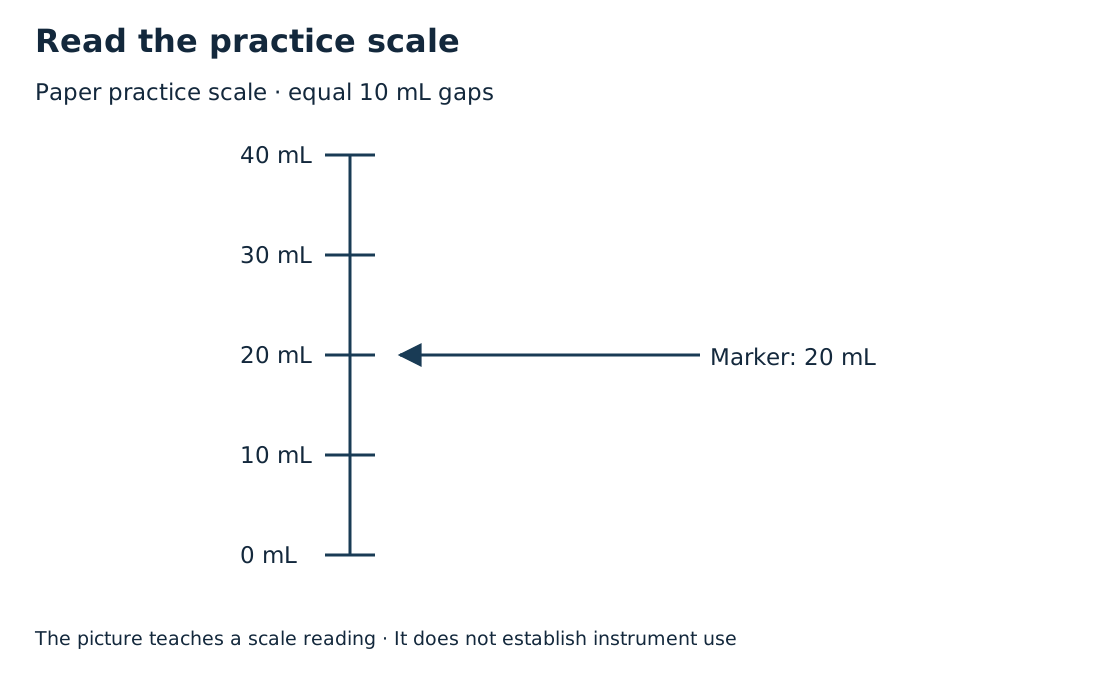
Try: practise the paper scale 0/10/20/30/40 mL and a reading at exactly 20 mL. With a familiar available instrument, teacher explicitly teaches actual safe scale-reading/recording before observed child use. A practice picture is not that conduct.
-
Compare: sort change / keep / measure: cover; start volume, tray, place and duration; amount remaining. A spill or changed location can undermine the comparison. Predict cautiously from earlier supplied clues, not from a tool-created answer.
-
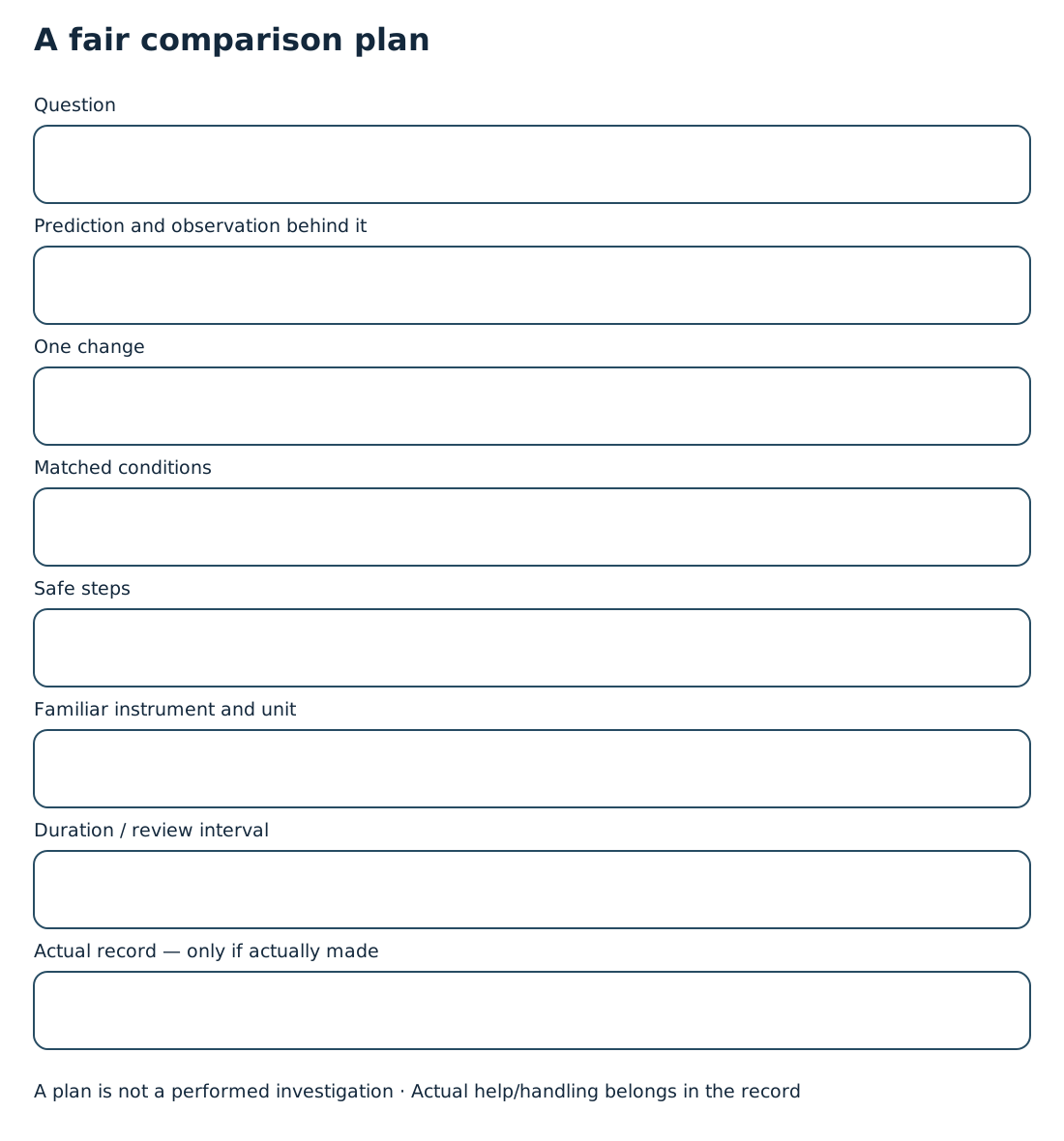
Make: fill the scaffold: question; observation behind prediction; one change; matched conditions; safe steps; instrument/unit; record time and result. Optional actual run starts only under suitable teacher-managed conditions; otherwise keep it a plan.
-
Exit: “My comparison changes __ and keeps __ the same. I would record __ in __.” Teacher records whether the child actually used the instrument and followed steps.
Three ways in
Plan builder
Select one-change/matched-condition cards and a mL recording header; use dictated wording for the complete plan.
Worked ordinary reasoning: Change the cover; match trays, start volume, room and 20-minute duration; measure remaining mL with the taught procedure.
Scale station
First interpret the explicit paper scale, then optionally use the site's familiar scaled container with teacher observation and usual access support.
Worked ordinary reasoning: The drawn 20 mL mark is a supplied reading. Actual use is recorded only if it happened, with the actual value/support.
Fair-test repair
Review a supplied unfair plan: one tray starts 40 mL, the other 20 mL and is moved outside. Edit two mismatches before choosing a prediction.
Worked ordinary reasoning: Match starting volume and place before comparing covers; we cannot conclude a cover effect from this unfair plan.
Look and choose the next teaching
Complete feasible scaffold and matched conditions; actual measurement evidence stays separate.
For unit/increment confusion teach a new clear 10 mL scale first; never mark an invented real measurement.
Today's complete resources
A10 · whole labelled picture · Complete terms · A10 · complete picture words
A11 · whole labelled picture · Complete terms · A11 · complete picture words
Short child start · Written read-aloud · Water Trail and paper
Partial opportunities: AC9S4I01, AC9S4I02, AC9S4I03, AC9S4H01 · Full mapping and limits